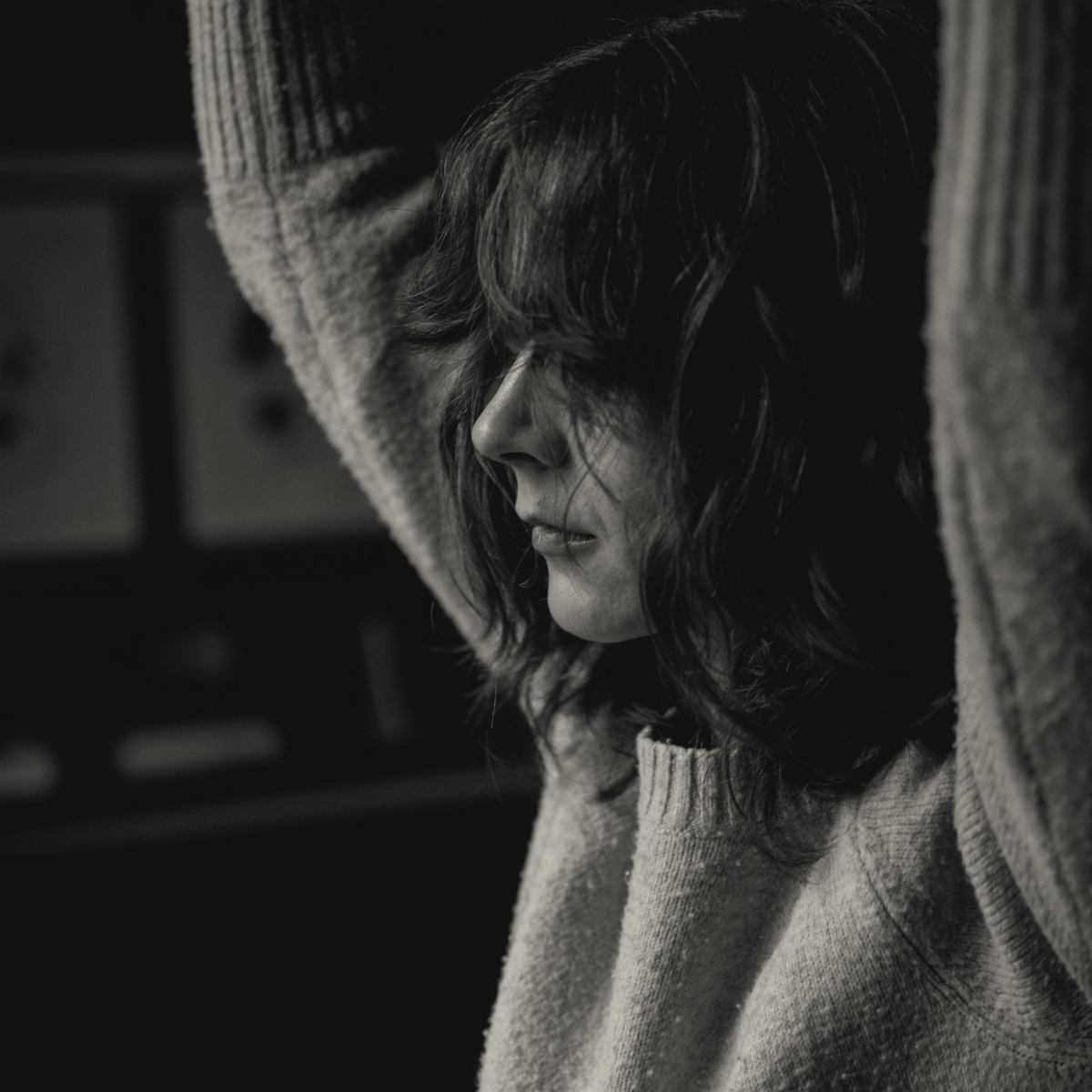
How I Got Here: A Practitioner's Backstory
This is one of the most personal and intimate pieces of writing you’ll find on my website. I’m honoured, and feel a little vulnerable, that you’ve arrived here.
I want to start by saying there isn't a neat version of this. No single moment. No epiphany on a yoga mat or a therapist's couch that redirected everything. What there is, if I'm honest, is a life – lived through this particular body, with its particular history – and a slow, sideways accumulation of things that helped, followed over time by a deepening curiosity about why.
A body that made itself known early
Trigger warning: The following section names domestic and family violence. I don’t linger here or go into detail.
My story includes experiences that I wouldn’t wish on anyone; a childhood home where violence lived in the walls; family ruptures that reshaped my life; loss of loved ones; accumulating grief that feels like broken bones. And through it – a body that responded. Inflammatory pain that would flare and migrate without warning. Nerves that fizzed. A mind that ran at a speed that felt more like a malfunction than a feature.
What I understood at the time was that I was sensitive. I absorbed rooms. I felt things before I could name them. I was frequently, mysteriously, very very sad.
What I understand now is that none of that was dysfunction, it was intelligence. My nervous system was doing exactly what nervous systems do: reading the environment, responding to it, adapting in ways that made sense given what was happening. The fizzing and the flaring and the mental acceleration were not problems with me, they were my body's attempt to keep me safe in a situation that was genuinely difficult.
It took a long time to be able to see it that way.
What thinking got me
I spent years in the territory of cognitive understanding. Sitting with kind therapists who asked good questions, working through frameworks that helped me see myself more clearly. I gathered language and insight and perspective in the way someone might collect useful objects: these could come in handy. These explain something. These might, eventually, add up to feeling better.
And it helped. Insight genuinely matters. Understanding your own patterns is not a consolation prize, but there's a ceiling to it, and I kept bumping against that ceiling.
I could articulate my patterns with real precision – name their origins, trace their logic, without much ever changing. The gap between knowing and living was real, and it didn't seem to be narrowing. I didn't have the language for this at the time. I just knew that something was missing from the toolkit.
Arriving sideways
A friend invited me to a yoga class. I went because she asked. I went back because it felt good. Then I trained to teach.
Yoga gave me a toolkit of breath and movement, but I could also see how easily bodies became shapes, how often we were guided to achieve a posture rather than to move towards a particular sensory experience of our own, unique and miraculous form.
So I followed my curiosity further, toward the edges and intersections. Teachers and practices that lived where movement met grief, where somatic work wove through nervous system science, where bodies weren't expected to be calm, compliant or impressive, just real.
Design thinking and the body
Before any of this, I worked in design. One of the most persistent ideas in design – the one that has stayed with me more than almost anything else I've learned – is that form follows function. The shape of a thing is determined by what it's for. You don't design the container and then work out what will go inside it. You understand what the thing needs to do, and you let that inform what it becomes.
I think about bodies this way now.
The posture someone carries, the places they brace, the breath patterns they've developed – these aren't accidents or flaws. They're adaptations. Form following function. The body has taken the shape required by the life it's been asked to live. The tightened shoulders aren't a problem to fix; they're information about what the shoulders have been carrying. The shallow breath isn't a bad habit; it's an intelligent response to a context that made deep breathing feel dangerous.
Somatic work, for me, is in large part about getting curious about the form in order to understand the function. What has this body been asked to do? What does it know that hasn't been put into words? What might it be able to do differently, given different conditions?
If you’d asked me 15 years ago how my design days would weave through my somatic work, I couldn’t have told you. But that design instinct – of attending carefully to what something is actually doing before deciding what it should do instead – runs through everything now.
The teachers who shaped this
The idea of the self-made practitioner is its own kind of myth, and I am deeply grateful to the teachers, mentors, practitioners and role models I’ve moved with and learned from.
Dr Scott Lyons, whose Somatic Stress Release™ training through The Embody Lab gave me a grounded, scientifically rigorous framework for working with stress and the nervous system. The 100-hour program was one of the most challenging and clarifying things I've done professionally.
Staci K Haines, whose work on somatics and social justice helped me understand that the body doesn't exist in isolation from the systems it moves through – that healing is not only personal but political, and that somatic practice without attention to power is incomplete.
Kai Cheng Thom, Nkem Ndefo, Dr Rae Johnson – practitioners and thinkers who hold the body in the context of race, trauma, identity and community, and whose work has been essential in shaping how I think about inclusion in this practice.
Licia Sky, Dr Richard Strozzi, Manuela Mishke-Reeds – for the rigour, gentleness and insistence that the body is a source of wisdom rather than a site of pathology.
And the less formally credentialled teachers: the people I've sat with in circles, the practitioners who've worked on and with my own body, the friends whose honesty has been its own form of somatic training.
None of this knowledge is mine originally. I'm a gatherer and a connector, trying to offer back, with care, what I've been given.
What I'm still figuring out
I hold a non-pathologising view of the body and mind because I know first-hand how limited labels can be. They’re absolutely useful sometimes – genuinely clarifying, even freeing – but never the whole story. I've had diagnoses that explained things and diagnoses that reduced things, and I've learned to hold both with light hands. I’m more interested in how a body feels and responds, than a name it’s been given to neatly package those responses.
I'm still figuring out what it means to practise ethically within traditions that have Indigenous roots I don't share. I'm still learning what accountability looks like in practice rather than in principle. I'm still learning how to hold my own experience – the grief, the pain history, the sensitivity that used to feel like a flaw – as something that qualifies me rather than makes me an imposter.
What I know is this: the person I've built this practice for is, in many ways, the person I was before I found these tools. Someone who lived largely in her head. Who had gathered enormous amounts of insight about herself and still couldn't quite close the gap between knowing and living. Who was looking for something that felt less clinical, less rushed, more honest about the mess.
If that sounds like you, then you probably already know whether this is for you.
You might like to read what actually happens in a somatic session before you decide anything – it answers most of the practical questions. Otherwise – I'm easy to reach, and questions are always welcome before booking.
Continue Reading
How to Listen to Your Body: 4 Pathways to Somatic Awareness
Gentle, trauma-informed techniques for tuning into your body – especially for highly sensitive people, burnout and chronic stress.
Your Inner Orchestra: A Look at Integrative Somatic Parts Work
How Somatic Parts Work helps you listen beneath the noise, soften inner conflict, and reconnect with the grounded presence at your core.

What is Somatic Awareness? The Difference Between Body and Soma
Discover what somatic awareness really means – the difference between the body you see and the body you feel from within.