1:1 Somatic Therapy
Somatic therapy is an invitation to care for yourself across time – the version of you who has carried pain, the body you live in right now, and the person you wish to become. It’s about learning to navigate the world without burning out or shrinking yourself.

“The human body is not an instrument to be used, but a realm of one's being to be experienced, explored, enriched…”
— Thomas Hanna
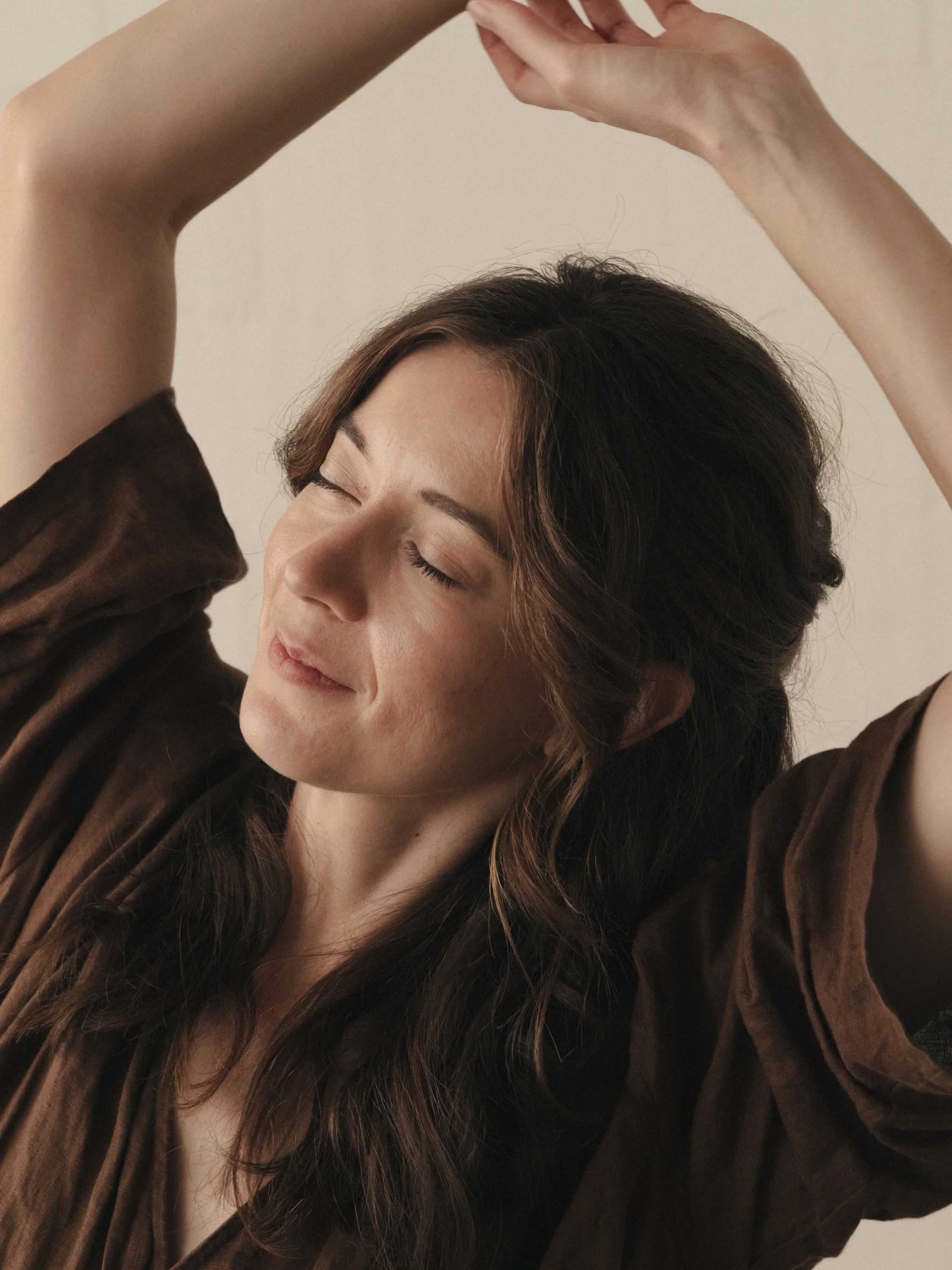
Begin a kinder conversation with your own experience, guided by sensation, impulse and felt sense.
Somatic therapy may be for you if you're ready to:
Feel more settled in your nervous system – less reactive, more able to meet stress without it swallowing you
Move through anxiety, grief or change with steadiness and self-trust
Make decisions from a place of felt clarity, not just analysis
Build a more curious, easeful relationship with your body
Reconnect with creativity, pleasure and the parts of you that have gone quiet
Come back to yourself – not a better version, just a more present one
Sessions follow what's actually present for you – a feeling without a name, a decision that keeps circling, an aliveness you want more of.
We work with sensation, movement, breath and imagery, and sometimes with the inner parts of you that have been quietly running the show. Depending on what's most supportive, I’ll draw from Somatic Stress Release™, Mind-Body Coaching and Somatic Parts Work.
-
Guided by positive psychology, neuroscience and embodied practice, mind-body coaching brings the thinking mind and the feeling body back into conversation. We translate self-awareness and insight into choices that feel aligned with your values and your nervous system's capacity – helping you become who you want to be.
-
We tend to notice stress in our minds – as hurried thoughts, indecision or brain fog. But the truth is, stress lives in the body. It shapes our breath, our posture and our ability to be present. This trauma-informed modality helps release what's been held and restores our natural capacity to adapt and recover.
-
We each hold many inner parts: helpers, dreamers, survivors. This gentle, relational process, inspired by Internal Family Systems (IFS), invites curiosity and compassion toward them all. Through embodied awareness and dialogue, these parts find safety and belonging, and a deeper sense of inner leadership emerges.
-
Originating from occupational therapy and developed in Japan, the Kawa Model views life as a flowing river, where health and wellbeing are shaped by relationships, life circumstances, and personal resources. This approach helps you explore what supports or blocks your flow, guiding practical and meaningful ways to move through life with balance and agency.


“With Shannon’s guidance, I can slow down, be present to what's happening inside and explore what's arising without needing to have it all figured out. She's been such a kind witness to my process. I leave feeling affirmed and more able to take my next steps.”
Questions worth asking
-
Sessions are $160 (AUD) and allow for 60 minutes together. If cost is your only barrier, I offer a limited number of reduced-rate sessions each month. Simply email me at hello@shannonpalmer.au and we'll find a way to be together.
-
Talk therapy focuses mostly on words and thoughts – exploring patterns, beliefs and the stories we tell ourselves. Somatic therapy includes these pieces, but it also brings the body into the conversation. We work with what you're feeling in your body as much as what you're thinking about it.
-
You can book an appointment or send me an email. If you have questions, we can also connect for a free curiosity call – it’s a gentle ‘vibe-check’, a fuss-free space to sense into the work, get a feel for me, and have your questions answered.
-
This process is nuanced and deeply individual – there’s no set timeline. Somatic therapy is most effective when experienced with some regularity over time. Many people begin with weekly or fortnightly sessions for a few months, then adjust the pace to what feels supportive for their body and ongoing curiosity.
-
At the moment, all sessions are online, so you can join from the comfort of your own space. Many of you tell me that sessions still feel intimate, felt, and grounded, even through a screen. In-person sessions in North Fremantle are coming soon – if you’d like to be notified when they’re available, joining my mailing list is the best way to hear first.
-
Absolutely. Somatic practice attends to whatever your body and nervous system can meet in the moment. I come to this work with a lived experience of neurodivergence, sensitivity and pain, and seek always to offer understanding and flexibility for your body as it is.
Your mind got you this far. Your body can take you further.
Most people I work with already know themselves pretty well. They might have a therapist, a meditation practice that comes and goes, a shelf of books they return to – and still, something isn't shifting. I spent a very long time in that place, too. If you’re here, perhaps insight has taken you as far as it can, and something more embodied is what's needed next.